How to Choose Escape Bags for Global Sourcing?
Choosing Escape Bags for global sourcing involves more than comparing prices on a supplier website. A sample may look strong under bright showroom lights, yet fail after repeated zipping, folding, or loading. Experienced buyers examine fabric density, stitching consistency, zipper performance, handle strength, and interior organization. They also check whether the factory can maintain quality across larger production runs.
Sourcing specialist Michael Chen puts it plainly: “A reliable Escape Bags supplier is measured by repeatable quality, not attractive samples alone.”
That standard changes the buying process. Request material specifications, inspection records, production photos, and clear tolerance limits. Ask how the supplier manages color variation, damaged hardware, packaging, and replacement units. A factory should explain these details without vague promises. It should also provide documentation that supports lawful import, product safety, labeling, and environmental requirements in the target market.
Small details matter.
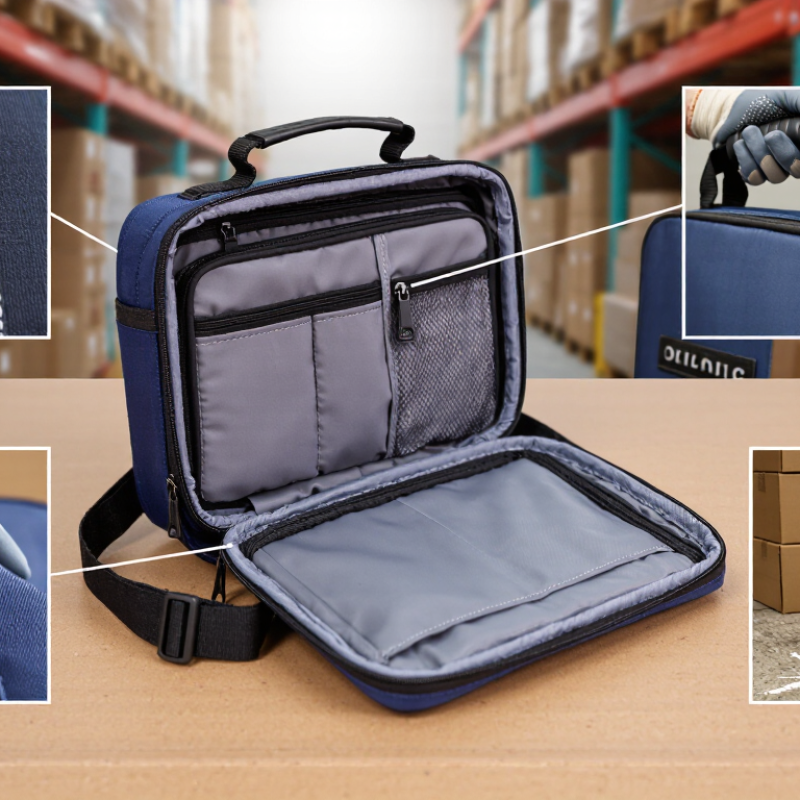
For example, test a packed bag on a warehouse floor, not only on a clean desk. Pull the zipper with gloves. Lift the bag by its loaded handle. Check whether corners scrape easily against rough surfaces. These practical tests reveal weaknesses early, although they cannot replace independent inspections.
Cost still matters, but the lowest quotation may hide higher rework, delays, or customer returns. I would also question suppliers that refuse reasonable audits. That is not proof of poor performance, but it deserves attention. Global sourcing rarely works perfectly on the first attempt. Careful comparison, documented communication, and honest review help buyers select Escape Bags that perform consistently from factory to final customer.
Define Escape-Bag Requirements Against FEMA’s 72-Hour Emergency-Supply Guidance
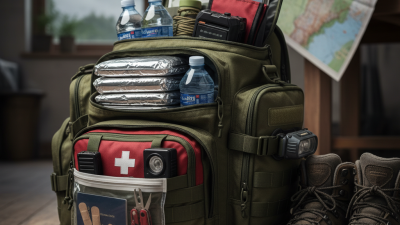
When choosing escape bags for global sourcing, start with FEMA’s 72-hour emergency-supply guidance. The bag should support one person for three days, not merely look spacious. Plan for drinking water, ready-to-eat food, a first-aid kit, a flashlight, spare batteries, and a battery-powered radio. Add essential medicines, hygiene items, blankets, and copies of important documents. Keep the contents practical.
Fit matters. A fully loaded bag should remain comfortable during walking, stair climbing, or crowded evacuation. Choose strong stitching, water-resistant fabric, reflective details, and simple compartments. Test zippers with gloved hands. Check whether the shoulder straps adjust for different body sizes. A sourcing team should request sample testing, material specifications, weight limits, and inspection records before placing a large order.
Local conditions can change the specification. Cold regions may need thermal layers, while hot climates require breathable storage and extra water planning. Families may need infant supplies, mobility support, or pet-care items. FEMA guidance is a useful baseline, not a universal formula. Verify destination-country labeling, product-safety, battery, and import requirements before shipment. Avoid promising complete protection; no bag solves every emergency. One overlooked detail can matter. A field trial with realistic contents often reveals problems that factory photos hide.
Set Load and Durability Specs Using ISO 9001 Supplier Quality Controls
Choosing escape bags for global sourcing requires more than comparing fabric thickness or quoted prices. Define the intended load in kilograms, including documents, water, tools, and protective items. Record the load range, bag dimensions, handle length, seam type, and closure design in one controlled specification.
Use ISO 9001 supplier quality controls to verify how each factory manages these requirements. Ask for approved drawings, material records, inspection plans, and batch traceability. A capable supplier should measure finished bags against agreed tolerances, not rely on visual checks alone. Request test evidence for static loading, handle pull strength, seam resistance, abrasion, and repeated opening. A practical trial may hang a fully loaded bag for 24 hours, then inspect stretched stitching, cracked coating, or distorted panels.
Tips:
Test production samples, not only development samples. Use a clear sampling plan for every batch. Photograph defects and link them to lot numbers. Require corrective-action reports with deadlines and verification. ISO 9001 supports controlled processes, but certification alone does not prove durability.
From sourcing experience, small details often expose weak control. A handle can feel secure while its internal reinforcement is too short. A supplier may pass one test and fail after humidity exposure. I would include conditioning tests before final approval, even when they increase lead time. The original load target may also be unrealistic, so review it after user trials and revise the specification when evidence demands it. Quality decisions should remain documented, repeatable, and open to challenge.
Screen Materials Against REACH’s 0.1% SVHC Article-Disclosure Threshold
How to Choose Escape Bags for Global Sourcing?
Screen Materials Against REACH’s 0.1% SVHC Article-Disclosure Threshold
For escape bags, assess each material and component, not just the finished bag. Under REACH, suppliers must communicate information when a Candidate List substance exceeds 0.1% by weight in an article. A coated handle, zipper pull, or printed panel may need separate review. The threshold triggers disclosure duties; it is not a blanket ban. ECHA’s June 2024 Candidate List update brought the list to 241 entries, making current supplier records essential.
Request dated material declarations that identify components, substances, and test methods. Match each declaration to a bill of materials, then use risk-based laboratory testing where answers are incomplete or material formulations have changed. Keep sample IDs and reports linked to production lots. One practical weakness: paperwork can look complete while overlooking a small trim part. Check the details.
Tips: Ask suppliers to disclose SVHC concentrations by article component and notify you of formulation changes. Keep test scope, dates, and supplier responses on file. Use ECHA’s Candidate List as the reference, and verify its latest version before ordering.
Plan Pre-Shipment Inspections With ISO 2859-1 AQL Sampling
For global escape-bag sourcing, define the inspection lot clearly: the same model, materials, and production run. ISO 2859-1 provides attribute-sampling plans; each sampled bag is checked against agreed requirements. Choose an inspection level and AQL for each defect class. Lot size and the selected plan determine the sample size and acceptance numbers.
AQL does not promise that every bag is defect-free. Small samples matter.
Inspect practical details: seam consistency, zipper operation, strap attachment, closure strength, labels, and packing. Have the inspector select bags across cartons, rather than only from an easy-to-reach pallet. Record each defect with a photo, location, and classification. Agree on critical, major, and minor defect limits before production; one AQL may not suit every issue. For instance, a loose strap may affect use more than a crooked label.
ISO tables cannot compensate for vague specifications. Define dimensions, materials, load requirements, and acceptable workmanship in the purchase documents. Inspection timing matters too: schedule it when production is complete and enough units are packed for random selection. If a lot fails, document the finding and agree on correction and reinspection before shipment. Sampling can miss defects, so treat the result as evidence for a decision, not certainty.
One uncomfortable question remains: are the requirements clear enough for two inspectors to reach the same judgment?
Compare Landed Costs Across the 3 Main Global Freight Modes: Air, Sea, and Road
Choosing escape bags for global sourcing means comparing the full landed cost, not just the freight quote. Air freight suits urgent, compact shipments, but charges may depend on dimensional weight. A bulky carton can cost more than its scale weight suggests. Sea freight usually lowers the cost per unit for larger orders, yet port handling, customs clearance, and inland delivery add charges. Sea is slower. Road freight can work well for nearby markets or cross-border routes, especially when door-to-door service avoids extra transfers. Its price and transit time depend on distance, border delays, and available capacity.
Compare each option using the same shipment details: carton dimensions, gross weight, order quantity, delivery address, and required arrival date. Include insurance, duties, local fees, and the cost of holding extra stock while goods travel. Ask suppliers how bags are packed; folded or compressed units may reduce freight volume, but packaging should still protect zippers, straps, and fabric from damage. I would not treat the lowest quote as the cheapest shipment. That assumption is easy to make, and sometimes wrong.
Tips: Request itemized quotes for all three modes. Check whether “door-to-door” includes final delivery fees. For a first order, consider sending a small batch by air and the balance by sea or road. Compare actual invoices with estimates afterward; freight assumptions do not always match the first shipment.
How to Choose Escape Bags for Global Sourcing? — Compare Landed Costs Across the 3 Main Global Freight Modes: Air, Sea, and Road
Illustrative comparison: 500 escape bags shipped from a supplier in China to a European destination. Figures are planning estimates in USD, not freight quotations.
| Comparison factor |
Air freight |
Sea freight (LCL) |
Road freight |
| Estimated door-to-door transit time |
5–10 days |
30–45 days |
18–30 days |
| Estimated freight and insurance to destination border, per bag |
$12.00 |
$2.20 |
$7.50 |
| Estimated origin, destination, and handling charges, per bag |
$2.50 |
$2.80 |
$2.50 |
| Estimated logistics cost, per bag |
$14.50 |
$5.00 |
$10.00 |
| Estimated import duty allowance, per bag |
$1.85 |
$1.36 |
$1.63 |
| Estimated landed cost, per bag* |
$41.35 |
$31.36 |
$36.63 |
| Estimated total for 500 bags* |
$20,675 |
$15,680 |
$18,315 |
| Best suited to |
Urgent replenishment, samples, or high-value orders where speed matters most |
Planned inventory shipments where minimizing transport cost is the priority |
A balance of transit time and cost on routes with reliable overland service |
| Main planning consideration |
Volumetric weight can make lightweight, bulky bags expensive to ship |
LCL minimums, port handling, and consolidation schedules can affect the final bill |
Availability, border procedures, and route conditions affect timing and price |
Cost assumptions: Unit purchase price is $25.00; shipment size is 500 bags with an estimated gross weight of 750 kg and volume of 6 m³. The duty allowance uses an illustrative 5% rate applied to the goods value plus estimated freight and insurance to the destination border.
Important: Landed cost estimates exclude VAT, which may be recoverable depending on the importer and local rules, as well as storage, inspection, and exceptional surcharges. Actual duty depends on the product’s correct HS classification and destination-country tariff. Confirm packed dimensions, Incoterms, customs charges, and current carrier quotations before placing an order.