Why Choose Poly Net Fabric for Global Sourcing?
Global sourcing is changing how manufacturers evaluate durable, lightweight materials. Poly Net Fabric stands out because it combines tensile strength, ventilation, low weight, and flexible customization. These qualities support applications such as agricultural covers, packaging nets, sports equipment, filtration layers, and industrial barriers.
The market evidence is significant. Textile Exchange’s Materials Market Report 2024 estimates that global fiber production reached 124 million tonnes in 2023. Polyester represented approximately 57% of total fiber output. This scale suggests strong supply capacity, but it does not guarantee responsible sourcing or consistent quality. Buyers still need verified specifications, production audits, and reliable shipment records.
Poly Net Fabric can simplify global procurement when suppliers provide clear mesh dimensions, yarn denier, tensile-strength results, UV resistance data, and coating details. A factory sample should be checked under realistic conditions, including stretching, moisture exposure, edge friction, and repeated handling. Intertek and SGS testing services commonly assess textile strength, colorfastness, composition, and restricted substances, helping buyers reduce avoidable sourcing risks.
Small details matter.
A lower quotation may hide weaker yarn, unstable coloration, or poor finishing control. The World Bank’s Logistics Performance Index 2023 also shows that customs efficiency, shipment tracking, and delivery reliability influence international purchasing decisions. Therefore, selecting Poly Net Fabric is not only a material decision. It is a supply-chain decision involving performance, documentation, compliance, and long-term communication.
The process is not perfect. Supplier claims still require independent verification. Yet, with measurable standards and transparent records, global buyers can make more confident decisions and build sourcing programs that balance cost, durability, and responsible production.
Poly Net Fabric Defined: Polymer Types, Mesh Structure, and End Uses
Why Choose Poly Net Fabric for Global Sourcing?
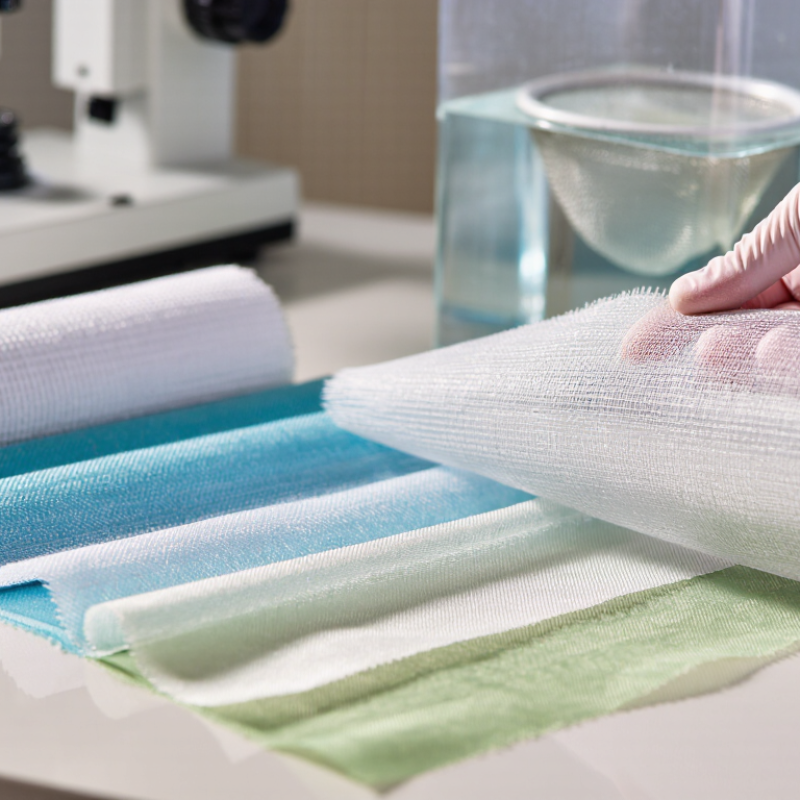
Poly net fabric is an open textile made from polymer yarns or extruded strands. Common polymers include polyethylene, polypropylene, polyester, and nylon. Each option changes strength, flexibility, chemical resistance, and outdoor performance.
Mesh structure matters as much as polymer choice. A 2-millimeter opening supports airflow and visibility, while tighter mesh improves screening and containment. Monofilament yarns offer clean openings and easy inspection. Multifilament yarns feel softer and bend more easily. During sourcing, buyers should confirm mesh size, yarn diameter, weight, tensile strength, UV treatment, and seam behavior. Small specification gaps can create large production problems.
The end uses are practical and varied. Poly net fabric appears in crop protection, aquaculture, sports barriers, filtration, packaging, shade systems, and construction safety applications. Textile Exchange’s Materials Market Report 2024 estimated global fiber production at 124 million tonnes in 2023, showing the scale of material selection across the textile sector. PlasticsEurope reported 400.3 million tonnes of global plastics production in 2022, emphasizing the importance of polymer efficiency and responsible sourcing.
Recycled content can reduce virgin material demand, but it is not automatic proof of sustainability. Test certificates, traceability records, and performance data still matter. I would also question vague claims such as “eco-friendly mesh.” Weather exposure, abrasion, and installation errors may shorten service life. A lower-priced fabric can become expensive after early replacement.
Why Choose Poly Net Fabric for Global Sourcing?
Poly Net Fabric Defined: Polymer Types, Mesh Structure, and End Uses
Polymer density affects the weight, handling, and material efficiency of net fabric. Polypropylene and polyethylene are lightweight options commonly used for agricultural netting, packaging mesh, protective barriers, and shade products. Polyamide and polyester provide higher density and are often selected when greater strength, abrasion resistance, or dimensional stability is required. Actual fabric performance also depends on mesh opening, yarn thickness, coating, and construction.
Data shown are representative nominal resin densities in g/cm³: LDPE 0.92, HDPE 0.95, PP 0.905, PA6 1.14, and PET 1.38. Fabric values vary by grade and manufacturing process.
Market Scale: Polyester Was 57% of Global Fiber Output in 2023 (Textile Exchange)
Why Choose Poly Net Fabric for Global Sourcing?
Polyester accounted for 57% of global fiber output in 2023, according to Textile Exchange. This scale matters for buyers seeking stable supply and repeatable specifications. Poly net fabric benefits from polyester’s broad manufacturing base, especially in filtration, packaging, agriculture, and protective mesh applications. In practice, sourcing teams can compare yarn counts, opening sizes, coating options, and roll widths across multiple production regions. That makes purchasing more measurable, not merely cheaper.
The material offers useful strength, dimensional stability, and resistance to everyday moisture. It also dries quickly after handling or washing. However, polyester is not a perfect choice. Its fossil-based origin and end-of-life challenges require careful evaluation. A supplier may describe recycled content, but buyers should request test reports and chain-of-custody evidence. I have found that small details matter: uneven apertures can affect airflow, while weak edge finishing may cause fraying during installation. Market scale helps, but it never replaces inspection.
Tips: Request a pre-production sample and measure aperture size at several points. Confirm tensile strength, roll length, color consistency, and packaging conditions. Ask how defects are recorded and corrected. Do not rely on a single percentage or certificate. A practical trial often reveals problems that paperwork misses.
Why Choose Poly Net Fabric for Global Sourcing? - Market Scale: Polyester Was 57% of Global Fiber Output in 2023 (Textile Exchange)
| Data Dimension | 2023 Data / Benchmark | What It Means for Poly Net Fabric Sourcing |
| Global fiber output | Approximately 124 million tonnes | A large raw-material base supports broad availability of polyester yarn and mesh-fabric inputs. |
| Polyester share of global fiber output | 57% | Polyester is the dominant fiber category, making it a practical choice for scalable international sourcing. |
| Implied polyester fiber volume | Approximately 70.7 million tonnes
124 million tonnes × 57% | High production volume can improve material continuity and reduce dependence on a narrow supply base. |
| Polyester fiber characteristics | Synthetic fiber with low moisture regain, high durability, and good dimensional stability | Suitable for netting that must retain strength and shape during repeated handling or outdoor use. |
| Typical polyester net construction | Warp-knit or woven mesh; specifications vary by yarn size, mesh opening, weight, and coating | Buyers can adjust openness, tensile performance, airflow, visibility, and coverage for different end uses. |
| Weather resistance | Polyester generally offers better resistance to moisture and sunlight than many natural fibers; UV performance depends on yarn, color, additives, and finishing | Appropriate for many shade, barrier, agricultural, construction, and outdoor-textile applications when the required UV grade is specified. |
| Moisture behavior | Low moisture absorption compared with cotton | The fabric dries relatively quickly and is less likely to become heavy from water absorption, although hydrophilic finishes can change performance. |
| Recycled polyester sourcing option | Available from post-consumer and post-industrial polyester feedstocks; recycled content must be verified in the finished product | Provides a lower-virgin-input option, subject to chain-of-custody documentation and the buyer’s required certification standard. |
| Quality-control priorities | Mesh size, fabric weight, width, tensile strength, tear strength, elongation, colorfastness, and UV performance | Standardized technical specifications make quotations and supplier comparisons more consistent across markets. |
| Sourcing implication | Large global polyester production base plus multiple yarn and finishing options | Poly net fabric can offer a balance of supply scalability, functional versatility, customization, and cost control. |
Source and calculation note: Global fiber-output and polyester-share figures are based on Textile Exchange, Materials Market Report 2024. The implied polyester volume is calculated as 124 million tonnes × 57% and is presented as an approximate estimate. Technical performance varies according to yarn specification, construction, coloration, coating, finishing, and test method.
Performance Specs: GSM, Mesh Size, Tensile Strength, and UV Resistance
Why Choose Poly Net Fabric for Global Sourcing?
Performance starts with measurable specifications, not attractive catalog photographs. In procurement, GSM commonly ranges from 60 to 180 g/m² for lightweight poly net fabric. Heavier fabric usually resists tearing better, but adds freight cost. ISO 3801 provides a recognized method for checking mass per unit area. Small errors matter. A 10% GSM variation can affect coverage and installation tension.
Mesh size controls airflow, visibility, and particle passage. Openings near 2–4 mm suit general screening, while 0.5–1 mm meshes provide finer separation. However, smaller openings can increase wind loading. Tensile strength should be tested in both directions, using ASTM D5035 or ISO 13934-1 methods. Practical sourcing records often show values from 20 to 60 MPa, depending on polymer type, tape structure, and coating. The number alone is incomplete.
UV resistance deserves stricter attention in global projects. Accelerated weathering under ASTM G154 can compare performance, but laboratory hours do not equal one universal service life. Outdoor exposure reports often identify 1,000–2,000 hours as a useful screening range, not a guarantee. Ask for retained tensile strength after testing. A retention level above 70% is a sensible purchasing target, though climate changes the result. I have seen fabrics pass laboratory checks yet weaken near hot, reflective walls. That detail is easy to miss.
Sourcing Economics: MOQ, Lead Time, Freight, and Regional Supplier Capacity
Poly net fabric can look inexpensive until purchasing teams measure the full sourcing cycle. MOQ often changes the real price. A low unit quote may require 5,000 meters, while a regional supplier accepts 800 meters. That smaller commitment can protect cash flow during product testing. However, smaller runs may carry higher setup costs. Ask for both figures. Numbers matter.
Lead time depends on yarn availability, knitting schedules, dyeing, inspection, and packing. In my sourcing reviews, a quoted 20-day lead time rarely means delivery to the warehouse. It may exclude sampling, approval, and freight booking. Add a written production calendar with approval dates and buffer days. Our first forecast was too optimistic. A delayed color approval added nine days and changed the launch plan. Request pre-production samples and weekly capacity updates. Do not treat a supplier promise as proof. Check recent output, machine count, overtime limits, and quality records.
Freight can erase a factory price advantage. Compare landed cost, not meter price. A full container may reduce freight per meter but create excess inventory. Air shipping solves urgency but can damage margins. Regional supplier capacity also matters during seasonal peaks. Ask whether the mill can reserve machines, source replacement yarn, and maintain inspection staff. Visit when practical, or arrange an independent audit with dated production evidence. Some estimates remain uncertain. Plan for friction.