
For global buyers, selecting China’s top Clogs Shoes manufacturers involves more than comparing factory prices. The right partner must balance design consistency, material safety, production capacity, and responsible communication. This guide introduces China’s manufacturing landscape through a buyer-focused, evidence-based lens. It considers workshop experience, product development, quality controls, export readiness, and after-sales responsiveness.
Experienced sourcing teams often begin with samples, not promises. They inspect sole bonding, clog weight, footbed support, surface finish, and size accuracy. A practical factory review may include production-line photographs, material records, inspection reports, and packaging checks. Buyers should also verify whether a manufacturer can maintain color, shape, and comfort across repeated orders. Small differences matter. A shoe that feels fine for five minutes may disappoint after a full workday. That assumption can fail. Factories also vary in communication speed, tooling capability, minimum order quantities, and defect-correction practices.
Reliable manufacturers should explain applicable product requirements, testing options, labor expectations, and shipment documentation clearly. No factory deserves trust without evidence. However, rankings can be imperfect because capacity, pricing, and quality change over time. This article therefore avoids treating “top” as a permanent label. Instead, it highlights manufacturers and evaluation practices that help buyers make informed, defensible decisions. Whether you need lightweight EVA clogs, durable work footwear, or customized branding, careful verification remains essential. The goal is not the cheapest pair. It is a dependable supply relationship built on transparent specifications, repeatable quality, and realistic expectations.
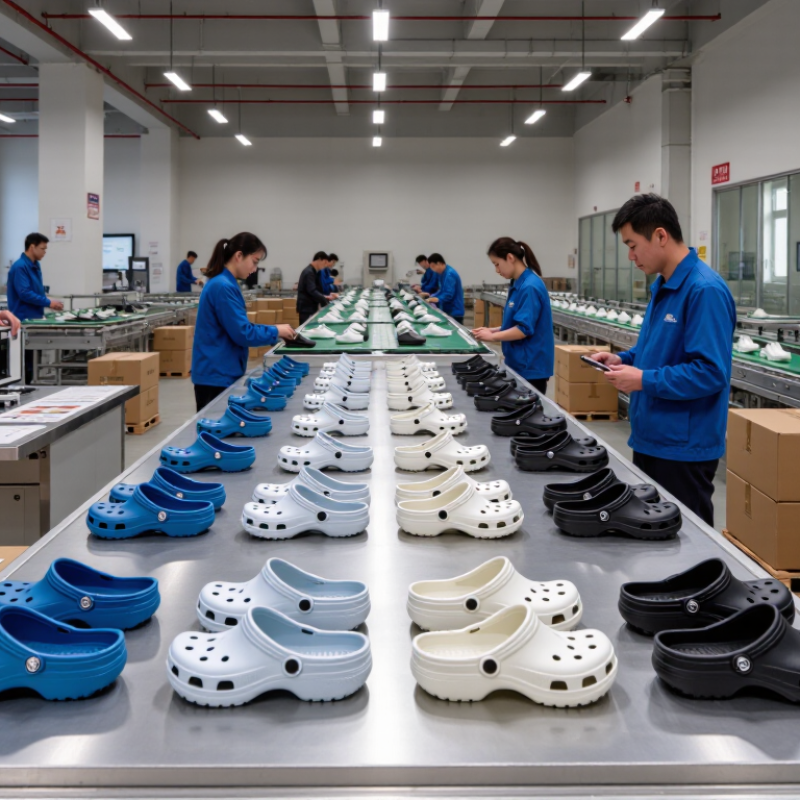
Chinese manufacturers supply several clog shoe types for global buyers, each suited to different markets and daily use. EVA clogs are lightweight, waterproof, and easy to clean. They work well for gardens, beaches, kitchens, and casual outdoor activities. PVC clogs offer a firmer feel and stronger resistance to moisture. Some factories also produce rubber clogs with deeper tread patterns for wet surfaces.
Leather and microfiber clogs provide a more structured appearance. Buyers often select them for hospitality, healthcare, and workplace uniforms. However, comfort depends on lining, footbed shape, and ventilation. Closed-toe styles offer more coverage, while open-back designs allow quicker movement. Chinese suppliers can also develop platform clogs, children’s styles, sandals with clog soles, and seasonal models with removable liners. Materials vary widely. A sample is essential.
Tips:
Check the upper material, outsole hardness, and size chart before placing a bulk order. Ask for testing documents when the shoes will enter regulated markets. Confirm odor control, color fastness, stitching quality, and packaging details. Wear the sample for several hours, not just five minutes. Small faults often appear later. Also review mold accuracy, because uneven edges can affect comfort and retail presentation. A supplier with clear production records, responsive communication, and consistent sample quality is usually easier to manage. Expect some revisions. Good development rarely happens perfectly on the first attempt.
China’s clog manufacturing is concentrated in several practical footwear regions. Zhejiang supports molded EVA and injection production, with suppliers skilled in lightweight soles and fast color changes. Fujian combines athletic footwear experience with stronger development teams and export-oriented factories. Guangdong offers flexible sourcing, accessory support, and efficient port connections. Jiangsu and nearby coastal areas can provide stitched uppers, molded components, and small-batch customization.
Factory capability matters more than location alone. A reliable supplier should explain mold ownership, material grades, testing routines, and monthly capacity. During a production visit, check ventilation, drying areas, trimming stations, and carton storage. Ask for samples from different production dates. This reveals whether size, density, and surface finish remain stable. A good first sample can still hide weak batch control. That uncomfortable gap deserves attention. Buyers should also verify product requirements, chemical testing, labeling, and packaging rules for each destination market.
Tips: Request a regional factory audit before placing a large order. Compare two or three samples under real walking conditions. Confirm lead times in writing, including mold changes and holiday delays. Do not judge quality from photos alone. A slightly imperfect sample may reveal honest production limits, while a perfect sample may be unusually selected.
China Top Clogs Shoes Manufacturers for Global Buyers
How to Evaluate Chinese Clogs Shoe Manufacturers
A reliable manufacturer should show more than attractive product photos. Request factory registration details, production records, and recent quality-control procedures. A video tour can reveal material storage, stitching areas, molding equipment, and packing conditions. However, video evidence is limited. An independent factory audit gives stronger confidence.
Ask for samples made with the same materials and process used for bulk orders. Check the clog’s weight, strap strength, footbed comfort, outsole grip, and size consistency. Measure several pairs, not just one. Small differences may become costly across thousands of units. Review material specifications, color standards, carton strength, and labeling requirements before approving production.
Evaluate communication through a realistic test order. Record how quickly the supplier answers technical questions and reports defects. Confirm minimum order quantities, production capacity, lead times, payment terms, and inspection points in writing. A capable team should explain its corrective-action process instead of promising perfection. Delays can still happen, even with careful planning. Leave schedule space for rework, shipping changes, and seasonal demand.
Request references from comparable buyers where possible, while protecting confidential information. Check whether the manufacturer can maintain quality during larger runs. A low quotation may hide weaker foam, inconsistent sizing, or insufficient inspections. Price matters, but repeatable quality and transparent cooperation usually matter more. Assess evidence, not confidence alone.
| Evaluation Dimension | Practical Benchmark | Recommended Evidence | Suggested Weight | Buyer Scoring Guide |
|---|---|---|---|---|
| Material Traceability | Each upper, footbed, outsole and accessory material should have a documented specification, supplier source and batch reference. | Material specification sheets, incoming inspection records and batch-control procedure. | 12% | 5 = complete traceability; 3 = partial records; 1 = no controlled documentation. |
| Product Size Consistency | Use an approved size chart and signed master sample. Measure length, width, opening and key fit points against agreed tolerances. | Technical drawing, measurement report and pre-production sample approval. | 10% | 5 = controlled measurement system; 3 = manual checks only; 1 = no defined tolerances. |
| Slip Resistance | Performance should be tested for the intended floor condition, such as ceramic tile with water or glycerol, using a recognized footwear test method. | Independent laboratory report identifying outsole compound, test surface, lubricant and test direction. | 14% | 5 = repeatable third-party results; 3 = internal test only; 1 = no slip test. |
| Flexing and Durability | The finished clog should be evaluated for repeated flexing, upper-to-sole bonding and visible cracking under the target use conditions. | Flexing-test records, bonding-strength results and failure-analysis reports. | 12% | 5 = documented pass criteria and trend analysis; 3 = basic inspection; 1 = visual check only. |
| Chemical and Restricted-Substance Control | Materials should be screened according to the destination market’s restricted-substance requirements, including applicable limits for dyes, plastics and adhesives. | Current laboratory test report, chemical-management policy and supplier declarations. | 12% | 5 = destination-specific testing; 3 = general declaration; 1 = no chemical controls. |
| Quality-Control System | A documented process should cover incoming materials, in-process checks, final inspection, defect classification and corrective action. | Quality manual, inspection checklist, calibration records and corrective-action examples. | 12% | 5 = fully documented and audited; 3 = basic checklist; 1 = informal inspection. |
| Pre-Shipment Inspection Plan | A buyer-approved sampling plan should define critical, major and minor defects. A commonly used example is zero critical defects, AQL 2.5 for major defects and AQL 4.0 for minor defects. | Inspection protocol, sample-size table and independent inspection reports. | 8% | 5 = buyer-approved plan consistently applied; 3 = inspection available on request; 1 = no formal plan. |
| Sampling and Development Speed | For standard clog construction, first samples commonly require about 7–15 calendar days; complex molds, special components or new tooling may require additional time. | Written sample schedule, tooling quotation and sample-revision log. | 6% | 5 = schedule met with controlled revisions; 3 = moderate delays; 1 = no reliable schedule. |
| Production Capacity and Lead Time | After sample approval and material confirmation, a standard production cycle often falls within approximately 30–60 calendar days, depending on order size and season. | Capacity plan, production calendar, material lead-time list and on-time-delivery history. | 6% | 5 = capacity supported by records; 3 = capacity estimated; 1 = no planning evidence. |
| Export and Compliance Documentation | The supplier should provide accurate commercial invoices, packing lists, carton details, product specifications and destination-market compliance documents when required. | Redacted shipping documents, compliance certificates, carton-marking sample and export process checklist. | 8% | 5 = complete and consistent documentation; 3 = minor gaps; 1 = frequent document errors. |
| Recommended Evaluation Method | Score each dimension from 1 to 5, multiply by the suggested weight, and compare suppliers using the same sample, specification and inspection conditions. | |||
Note: Benchmarks are indicative sourcing references. Final acceptance criteria should be confirmed against the product design, intended use and legal requirements of the destination market.
China’s leading clog manufacturers support global buyers with practical material choices and controlled production. EVA is lightweight, flexible, and suitable for everyday clogs. Rubber adds grip, while cork blends offer a firmer, natural feel. Leather uppers can improve appearance, but they require careful moisture and color testing. Material decisions should match climate, usage, and target price.
Customization can cover footbed shape, outsole patterns, strap length, colors, and packaging. Buyers should provide drawings, measurements, and reference samples before production. A useful prototype checks more than appearance. It should fit different feet, bend smoothly, and remain stable on wet flooring. Small details matter. A loose rivet can quickly damage customer trust.
Quality control should begin with incoming material checks and continue through assembly. Inspectors can measure size, verify color consistency, test bonding strength, and examine stitching. Flexing tests and abrasion checks reveal weaknesses that photographs cannot show. Odor and surface inspections are also important for enclosed footwear. Factories with traceable inspection records offer stronger reliability. Independent laboratory testing may support market-entry requirements. A first sample may look excellent yet fail after repeated wear. That is normal, but it should not be ignored. Manufacturers and buyers need to review failures, adjust tooling, and approve a final sample before bulk production. No production system is perfect. Honest reporting usually prevents expensive surprises.
China Top Clogs Shoes Manufacturers for Global Buyers
Ordering from China starts with a clear technical brief. Specify upper material, sole density, sizes, colors, packaging, and logo requirements. Request samples before discussing large quantities. One approved sample should become the production reference. Experienced buyers usually compare three to five factories, not only their lowest prices. Factory audits should review molding equipment, inspection records, worker safety, and monthly capacity. World Footwear’s 2024 Yearbook reports that Asia produced about 87% of global footwear in 2023, confirming the region’s strong manufacturing depth. China remained the largest producer.
Pricing needs more than a factory quotation. Ask for tooling, sample, packaging, inspection, and export-document fees separately. Clarify whether the price is EXW, FOB, or another Incoterm under ICC Incoterms 2020. Ocean freight, insurance, customs duties, and destination charges can change the landed cost sharply. Payment terms should match production milestones. A common structure uses a deposit and a balance after inspection, but terms require negotiation. Prices may rise when EVA, rubber, labor, or freight costs move. A cheap offer can become expensive. That lesson is often learned late.
Tips: Build a landed-cost sheet before ordering. Check HS classification with a qualified customs broker because clog materials can affect classification. Confirm carton measurements and shipping marks before production. For export control, labeling, chemical, and consumer-safety requirements, verify the destination country’s current rules. The International Trade Centre’s Trade Map can help compare import values and supplier markets. Leave a small tolerance for color variation and manual finishing. Perfect consistency is difficult, especially across large batches. A written corrective-action process protects both sides when defects appear.
Typical ordering, pricing, and export planning benchmarks for international buyers
The chart presents practical planning ranges commonly used in China footwear sourcing. Prices are indicative FOB ranges per pair and can vary according to material, outsole construction, customization, order quantity, packaging, and destination requirements. Production and export lead times should be confirmed with the selected factory before placing an order.