
Why Choose Outdoor Litter Bins for Public Spaces?
Why Choose Outdoor Litter Bins for Public Spaces?
Public spaces reveal how waste systems perform. A full bin beside a bench can discourage use, while a clean, well-placed container supports better habits. Outdoor Litter Bins are not decorative extras. They are practical infrastructure for parks, streets, transport areas, schools, and commercial zones.
Keep America Beautiful’s 2020 National Litter Study estimated 50 billion pieces of litter across the United States. That equals approximately 152 littered items per resident. The report also identified food and beverage packaging among the most common items. Keep Britain Tidy’s Local Environmental Quality Surveys similarly show that visible litter remains a recurring concern in public environments. These findings suggest a simple weakness: waste disposal must be convenient, visible, and regularly maintained.
David Biderman, former president and CEO of Keep America Beautiful, has described litter as “a solvable problem.” The quote is useful, but it needs qualification. Bins alone cannot solve poor collection schedules, overflowing capacity, or careless placement. Experience from facility teams shows the details matter: a 90-litre bin near a crowded food stall may fill quickly, while a smaller unit may work beside a quiet pathway. Clear openings, durable materials, weather resistance, and accessible servicing all influence performance.
Choosing Outdoor Litter Bins therefore requires more than comparing prices. Site behavior, footfall, waste type, cleaning frequency, and accessibility should guide the decision. The evidence is strong, but not perfect. Local audits remain essential. A thoughtfully planned bin system can make responsible disposal easier, safer, and more visible. Small design choices matter.
What Are Outdoor Litter Bins and Where Are They Used?
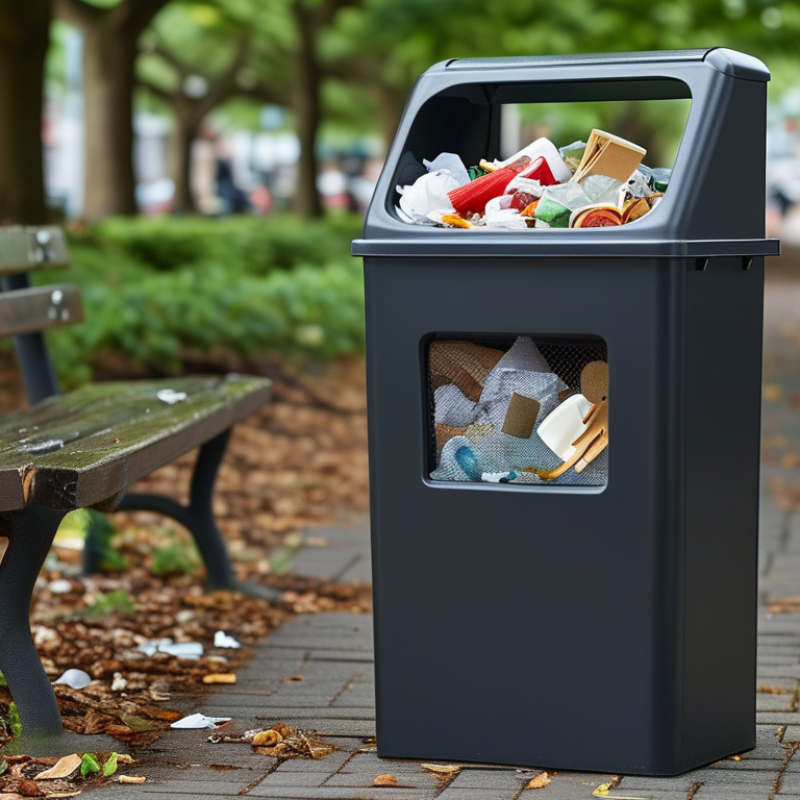
Outdoor litter bins are weather-resistant receptacles designed for shared, open-air areas. They commonly use coated metal, galvanized steel, or durable plastic. Many include removable liners and rain-shedding lids. A narrow opening can reduce windblown waste. A removable liner can speed up collection. They are not decoration. They form part of a public waste-control system.
The U.S. Environmental Protection Agency reported 292.4 million tons of municipal solid waste in 2018, or 4.9 pounds per person daily. Public bins handle only a fraction of this material, but that fraction remains highly visible. Keep America Beautiful’s 2020 National Litter Study estimated 50 billion litter items across the United States. Outdoor bins are used near streets, bus stops, parks, playgrounds, campuses, shopping promenades, beaches, and civic entrances. Busy transit areas usually need larger capacity and more frequent servicing. Quiet paths may need fewer units, but strong visibility still matters.
Placement is never perfect. Facility teams should watch overflow patterns, weather exposure, and pedestrian movement before changing locations. A bin beside a bench may collect cups and wrappers effectively. A hidden bin may remain unused. In practice, servicing schedules can matter as much as bin design. Even a durable unit fails when collection is delayed. These observations should be recorded during routine site inspections, not guessed from a plan alone. Sources: U.S. EPA, Advancing Sustainable Materials Management: 2018 Fact and Figures; Keep America Beautiful, 2020 National Litter Study.
Why Choose Outdoor Litter Bins for Public Spaces? - What Are Outdoor Litter Bins and Where Are They Used?
Outdoor litter bins are purpose-built waste containers designed for uncovered public areas. They typically combine weather-resistant materials, secure mounting options, controlled openings, and sufficient capacity for routine public use.
| Outdoor Litter Bin Type | Typical Capacity | Common Locations | Typical Materials | Key Design Features | Suitable Waste | Main Operational Considerations |
|---|---|---|---|---|---|---|
| Open-Top Litter Bin | 30–60 L | Pedestrian streets, parks, plazas, and entrances | Galvanized steel, powder-coated steel, aluminum, or high-density plastic | Quick disposal, wide opening, simple construction, and easy liner replacement | General public litter such as wrappers, cups, and paper | Requires regular emptying and may need a rain hood or drainage holes in exposed areas |
| Covered-Top Litter Bin | 50–120 L | Shopping areas, transport stops, school grounds, and civic spaces | Powder-coated steel, stainless steel, aluminum, or UV-stabilized plastic | Protective lid, restricted opening, rain shielding, and reduced visibility of waste | Mixed general litter in areas exposed to rain and wind | Helps limit water entry and overflow; hinges and latches should be inspected periodically |
| Wall-Mounted Litter Bin | 20–50 L | Building exteriors, narrow walkways, transit platforms, and pedestrian corridors | Coated steel, stainless steel, or durable molded plastic | Compact footprint, fixed mounting, and clear floor space beneath the unit | Light general litter in locations with limited ground space | Requires a structurally suitable wall and secure installation at an accessible height |
| Post-Mounted Litter Bin | 30–70 L | Park paths, roadside pedestrian areas, campuses, and open-air venues | Galvanized or powder-coated steel, aluminum, or UV-resistant plastic | Small ground footprint, anchored support post, and visible placement | General litter from pedestrians and visitors | Needs a stable foundation and sufficient clearance for maintenance vehicles or staff |
| Heavy-Duty Outdoor Litter Bin | 80–240 L | Large parks, event venues, busy public squares, and commercial districts | Thick-gauge galvanized steel, stainless steel, reinforced plastic, or concrete-supported structures | High volume, impact resistance, reinforced doors, and robust anchoring | High volumes of general public litter and lightweight packaging | Reduces collection rounds in busy areas but requires suitable access for emptying and transport |
| Recycling Station | 2 × 60–120 L or more | Transport hubs, campuses, offices, sports facilities, and public events | Powder-coated steel, stainless steel, aluminum, or recycled-content plastic | Separate compartments, color or symbol coding, labeled openings, and modular construction | Separate streams such as bottles, cans, paper, and residual waste | Works best with consistent signage, compatible collection systems, and regular contamination checks |
| Animal-Waste Bin | 25–60 L | Dog parks, sidewalks, residential paths, and park entrances | Coated steel, stainless steel, or UV-resistant plastic | Small restricted opening, bag dispenser compatibility, and odor-control options | Bagged pet waste | Should be positioned near walking routes and serviced frequently to maintain hygiene |
| Cigarette-Waste Receptacle | 2–15 L | Building entrances, hospitality areas, transport facilities, and designated smoking areas | Stainless steel, galvanized steel, or flame-resistant metal components | Non-combustible construction, narrow extinguishing opening, and removable ash container | Cigarette ends and small quantities of ash | Should be kept separate from combustible waste and emptied after the contents have cooled |
Data note: Capacity figures are typical planning ranges rather than universal specifications. The appropriate bin size and collection frequency depend on foot traffic, local weather, event schedules, waste composition, and municipal servicing procedures.